Life as a woman unfolds through several biological
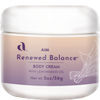
2 oz Cream
Retail Price USD$
41.00
Your Price USD$
36.50
|
stages. The variations on how these are experienced are
as diverse as life itself. Whether considering birth, infancy,
childhood, puberty, adolescence, reproductive maturity or
menopause, each is a natural part of being alive. At the
same time, any woman who is having an incredibly difficult
time going through the stages of menopause will most
likely say that it certainly doesn’t feel natural.
And so it begins
Several years before menopause, a woman enters an
interval known as perimenopause, when changes start to
occur in hormone production.
Inside every woman’s body are at least fifty different
hormones. These chemical messengers circulate in the
bloodstream, controlling the starting, stopping, speeding
up or slowing down of functions and processes in organs
and body systems such as the reproductive system.
During perimenopause, estrogen and progesterone
levels begin to fall and fluctuate. This hormonal change
is a natural part of the transition. However, the resulting
imbalance can begin to trigger a number of symptoms
associated with menopause, including depression, hot
flashes, night sweats, mood changes, insomnia, water
retention and weight gain. Although irregular menstrual
cycles can also occur, pregnancy is still possible during the
perimenopausal years.
Menopause and Hormonal Imbalance
The ovaries produce estrogen and progesterone, the
primary hormones involved in reproduction. A balanced
ratio of these hormones is required for the optimal
functioning of the reproductive system, including the
menstrual cycle and fertility.
A woman is born with a lifetime reserve of around
two million eggs that are stored in the ovarian follicles.
Over time, the ovaries begin to reduce in size. As the
number of follicles declines during the aging process,
follicle-stimulating and luteinizing hormones are unable to
regulate estrogen and progesterone levels, which control
the menstrual cycle.
When a woman misses her period for twelve consecutive
months, she has officially entered menopause. Her ovaries
no longer release eggs and stop most of their estrogen
and progesterone production.
This gradual transition that signals an end to the
reproductive years typically starts when a woman is in her
forties or fifties. However, menopause can begin at an
earlier or much later age.
The body of each woman is different, so the effects
of the physiological changes during menopause are not
the same for every woman. Some women experience a
varying number of uncomfortable symptoms while others
experience the transition with little or no discomfort.
Menopausal symptoms result when levels of estrogen are
higher than progesterone, creating a hormonal imbalance.
One factor that contributes to “estrogen dominance” is
the prevalence of endocrine-disrupting chemicals called
xenoestrogens, which may be found in animal, dairy and
skin-care products, herbicides and pesticides, plastics, etc.
To restore the balance, it may be helpful to use natural
progesterone cream.
Completing the Transition
The final stage of the transition is referred to as
postmenopause. Unpleasant symptoms may ease off at this
point in time. Simultaneously, because of lower than normal
levels of estrogen, the postmenopausal period can increase
the risk of developing health problems, including urinary
incontinence, osteoporosis and cardiovascular issues.
Still, the fact is that good health can be maintained
right from the start, leading to a smooth transition through
menopause and a new beginning.
Natural Remedies
First and foremost, embracing this inevitable stage of life
with a positive attitude is a healthy way of adjusting. Rather
than viewing menopause as an ending to youthfulness and
fertility, accepting it as a new life chapter puts an entirely
different read on the situation.
Lifestyle changes that include a primarily plant-based
(anti-inflammatory) diet, regular exercise, plenty of rest
and relaxation will go a long way in making a smooth
transition through menopause.
Natural health products that provide supplemental
nutrients to help the body adjust to the transition can also
be beneficial in avoiding menopausal symptoms.
This bulletin is for information in the United States only.
It has not been evaluated by the U.S. Food and Drug Administration.
©2017 AIM International, Inc. All rights reserved. Printed in the USA.
|


